
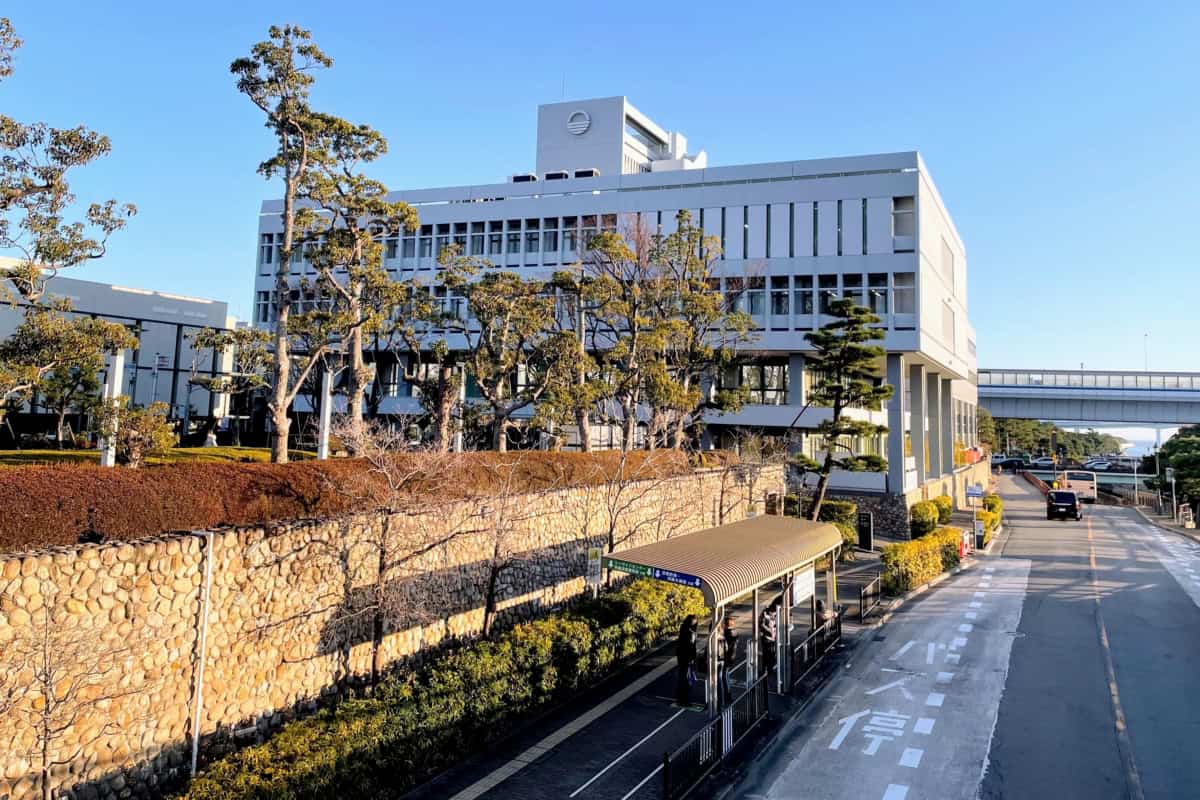
There are all kinds of rumors about Rokurokusocho in Ashiya, such as “there isn’t a single utility pole,” “there are no convenience stores,” and “you have to pay ¥500,000 to the neighborhood association to live there.”
In our previous article, we used city documents to explain Rokurokuso’s “mansion ordinance” (※link to the previous article). This time, as a follow-up, we will check the most common rumors one by one using publicly available materials from Ashiya City and other sources. To give you the short answer: some turned out to be true, while others were only partly true.
Rumor 1: Rokurokuso does not have a single utility pole → Partly true
It is true that Rokurokuso has very few utility poles. According to Ashiya City documents, electrical and telephone lines have been installed underground since the neighborhood was first developed. The city describes Rokurokuso as a privately developed neighborhood from the early Showa era with no overhead utility lines.
However, the same city documents also state that while most of Rokurokusocho has underground utility lines, utility poles still line some parts of the neighborhood.
That is where the residents stepped in. According to city documents, events unfolded as follows.
| Date | Development |
|---|---|
| October 2018 | The Rokurokusocho Neighborhood Association submitted a request to the city to remove overhead utility lines |
| FY2019 | Four study sessions on moving utility lines underground were held |
| FY2020 | Discussions were held with utility-line operators about moving the project forward |
| FY2021 | Underground infrastructure was surveyed, and possible locations for aboveground equipment were examined |
| FY2022 | The neighborhood association took the lead in coordinating locations for aboveground equipment with landowners |
| December 2022 | Approximately 1.46 km in the Rokurokuso area was added to the city’s implementation plan for removing overhead utility lines |
Moving utility lines underground requires boxes containing transformers and other equipment to be installed somewhere along the road. Securing locations for this equipment is a major obstacle to underground utility projects throughout Japan. In Rokurokuso, the project began moving forward because the neighborhood association itself took responsibility for coordinating those locations. At a city exhibition in November 2023, Ashiya City described the underground utility project in Rokurokusocho as “currently underway.”
Saying that “there isn’t a single utility pole” is an exaggeration, but it would be accurate to call Rokurokuso “a neighborhood whose residents are working toward having zero utility poles.”
Rumor 2: Rokurokuso was the first neighborhood in Japan to put utility lines underground → Not confirmed by official sources
Rokurokuso is also often described as “the first neighborhood in Japan to put its utility lines underground.”
However, none of the Ashiya City documents reviewed for this article described it as “Japan’s first.” The city only explains that it was a privately developed neighborhood with no overhead utility lines dating back to the early Showa era. We will leave this claim unconfirmed.
Rumor 3: There are no convenience stores or supermarkets → True (they cannot be built in the first place)
Under the local rules, this is true. The Rokurokusocho district plan limits permitted buildings to the following:
- Detached houses
- Community centers and meeting halls used for residents’ activities
- Public facilities such as police boxes and public telephone booths
- Buildings ancillary to the above
Stores such as convenience stores, supermarkets, and restaurants are not included on this list. In other words, it is not simply that they do not exist—they cannot be built. However, buildings that were already standing when the district plan was adopted are exempt.
Rumor 4: There are no apartment buildings or three-story homes → True
Under the local rules, this is also true. Because the district plan permits only detached houses, apartment buildings cannot be constructed.
Buildings are also limited to a maximum height of 10 meters, with eaves no higher than 7 meters. It has also been reported that the neighborhood association’s building agreement limits buildings to two stories above ground. We explained the details in our previous article about the mansion ordinance.
Rumor 5: The roads belong to the residents → Once true, but there are now city roads as well
Ashiya City documents state that Rokurokuso formed a neighborhood association from the beginning of its development and independently managed roads, waterways, bridges over waterways, and other shared facilities within the district.
On the other hand, the same documents refer to property in Rokurokusocho that faces “City Road No. 142.” Rokurokuso now has city roads as well, and the underground utility project mentioned in Rumor 1 is being carried out by the city in its capacity as the road administrator. While it is true that residents have historically maintained the neighborhood’s infrastructure themselves, it does not appear that “all the roads belong to the residents.”
Rumor 6: You must pay ¥500,000 to the neighborhood association to live there → True (listed in a property advertisement)
This was confirmed in a real estate listing. A listing for land in Rokurokusocho on Mitsubishi Estate’s Sumai Relay website states the following fees (as of October 2026).
| Item | Amount |
|---|---|
| Rokurokusocho Neighborhood Association membership contribution | ¥500,000 |
| Neighborhood association fee | ¥1,000 per month |
| Reserve fund contribution | ¥500 per month |
The initial ¥500,000 payment may seem substantial, but the monthly dues are not significantly different from those of a typical neighborhood association. Given the neighborhood’s history of independently maintaining its roads and waterways, the arrangement can also be viewed as a system through which residents share the cost of maintaining their community. Please note that these amounts were taken from the property listing and may change.
Rumor 7: There are no traffic lights or vending machines → Not confirmed by official sources
Some sources also claim that “there are no traffic lights or vending machines in the neighborhood.”
However, we could not find any official documents supporting this claim. The district plan’s restrictions govern the types of buildings that can be constructed and do not prohibit vending machines. If there are no vending machines, it may be due to agreements among residents or consideration for the neighborhood’s appearance rather than a formal rule. We will leave this claim unconfirmed.
Summary of Findings
| Rumor | Finding |
|---|---|
| There is not a single utility pole | Partly true (most utility lines are already underground, and work is underway in the remaining areas at the neighborhood association’s request) |
| Rokurokuso was the first neighborhood in Japan to put utility lines underground | Not confirmed by official sources |
| There are no convenience stores or supermarkets | True (the rules do not permit them to be built) |
| There are no apartment buildings or three-story homes | True (only detached houses are permitted, with a maximum height of 10 meters) |
| The roads belong to the residents | Once true (there are now city roads as well) |
| You must pay ¥500,000 to the neighborhood association to live there | True (listed in a property advertisement) |
| There are no traffic lights or vending machines | Not confirmed by official sources |
Looking into these rumors reveals that Rokurokuso is defined less by the fact that many wealthy people live there than by the way its residents have maintained the neighborhood’s rules and infrastructure themselves. Underground utility lines, resident-managed roads, neighborhood association fees, and the continuing campaign to remove the remaining utility poles are all part of the same tradition.
City documents also state that Rokurokuso was developed from 1928 onward, modeled after an upscale residential district on Hong Kong Island. In our next article, we will trace the history of how Rokurokuso came to be.
References
- Ashiya City: Initiatives to Remove Overhead Utility Lines (November 2022, materials for the Standing Committee on Construction and Public Enterprises)
- Ashiya City: FY2023 Report on Underground Utility Lines Day
- Ashiya City: Overview of the Rokurokusocho District Plan
- Ashiya City: Landscape Consideration Policy (Rokurokusocho)
- Mitsubishi Estate Sumai Relay: Land for Sale in Rokurokusocho
- Newsweek Japan
- Gentosha Gold Online
六麓荘の噂、あなたが一番「マジで!?」って思ったのはどれ?